
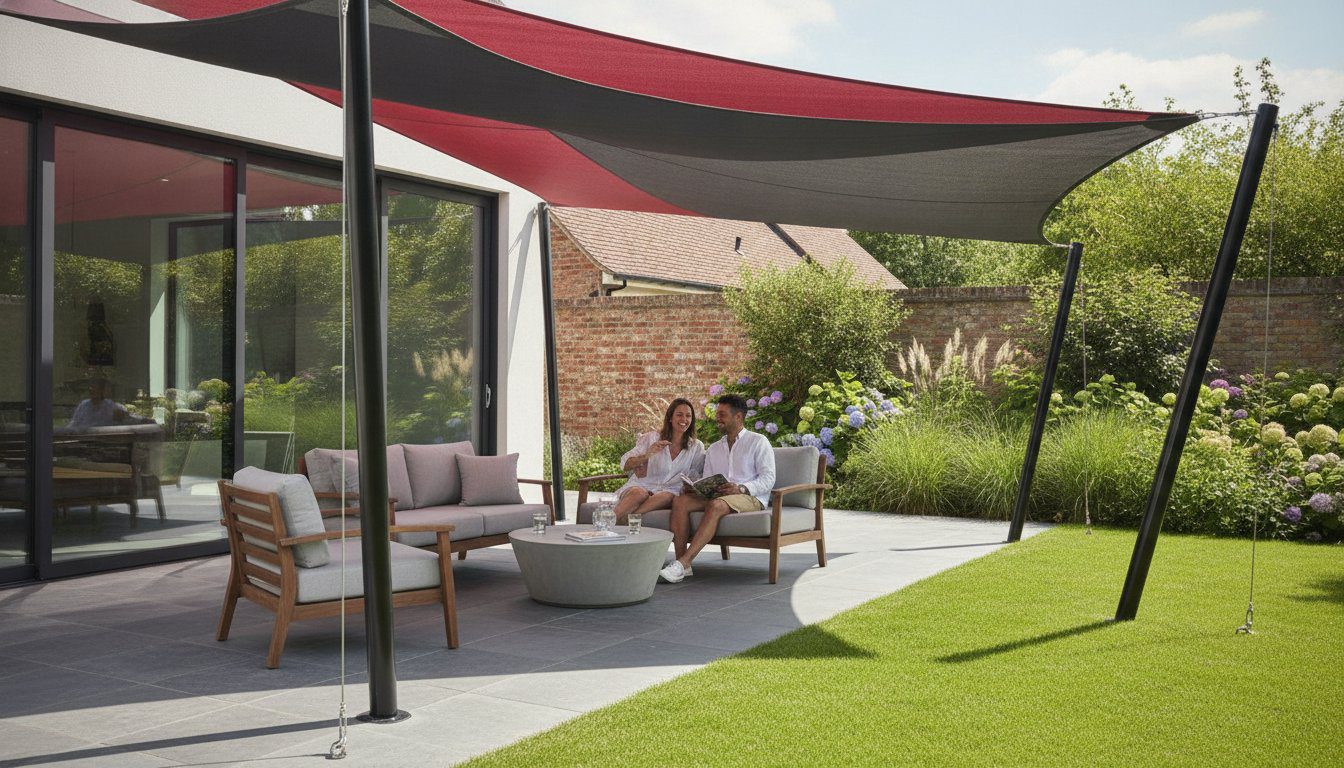
Freestanding Sail Shades: 5 Architectural Examples for UK Gardens in 2026
What if you could install a striking, high-performance canopy in the middle of your garden without ever touching your home’s exterior walls? Many homeowners feel restricted by the lack of structural points on modern extensions or the delicate nature of heritage stonework. If you’ve been searching for freestanding sail shades that offer a permanent, architectural alternative to flimsy parasols, you’re looking for a solution that prioritises both style and stability. You deserve an outdoor space that feels like a professional sanctuary, not a constant battle with the British wind.
We believe that your garden should be a reprieve from daily pressures, which is why we focus on high-tension, bespoke solutions that stand entirely on their own. This article will show you how to achieve versatile shading that complements your landscape’s unique aesthetic without requiring any building attachments. We’ll preview five sophisticated architectural examples for 2026, ranging from minimalist masts to complex multi-sail designs. You’ll learn how professional engineering can finally turn your exposed patio into a stylish, year-round retreat.
Key Takeaways
- Learn why freestanding sail shades are the ultimate solution for glass-fronted extensions or listed buildings where wall-mounted fixings aren’t an option.
- Discover the engineering secrets of high-tension masts and marine-grade materials that keep your structure stable whilst others fail in the wind.
- Understand the long-term value of bespoke architectural designs compared to temporary kits that often struggle to survive a single British summer.
- Get inspired by five unique garden layouts that use independent structures to create stylish, functional “outdoor rooms” in any location.
- Explore the professional design process, from initial structural planning to selecting the perfect high-performance fabric to match your garden’s colour palette.
What Are Freestanding Sail Shades and Why Choose Them?
Think of freestanding sail shades not as mere garden accessories, but as permanent architectural interventions. Unlike traditional sails that rely on your home’s masonry for support, these independent structures are held aloft by high-grade, ground-mounted masts. This “wall-free” design is a game-changer for the modern UK garden. It allows you to position high-tension shade exactly where you need it, whether that is over a central lawn, a poolside terrace, or a secluded dining area far from the main house. By utilising the engineering principles of a tensile structure, these sails maintain a crisp, taut appearance that resists sagging, even during a typical British downpour.
The aesthetic impact of a bespoke freestanding system is undeniable. Rather than a cluttered collection of parasol bases or flimsy gazebos, you gain a sculptural feature that adds value to your property. The masts themselves, often crafted from marine-grade stainless steel or structural aluminium, provide a sleek, contemporary silhouette that complements both minimalist landscapes and traditional gardens. It’s a professional solution that prioritises long-term durability whilst creating a striking focal point for your outdoor living space.
The Limitations of Wall-Mounted Shades
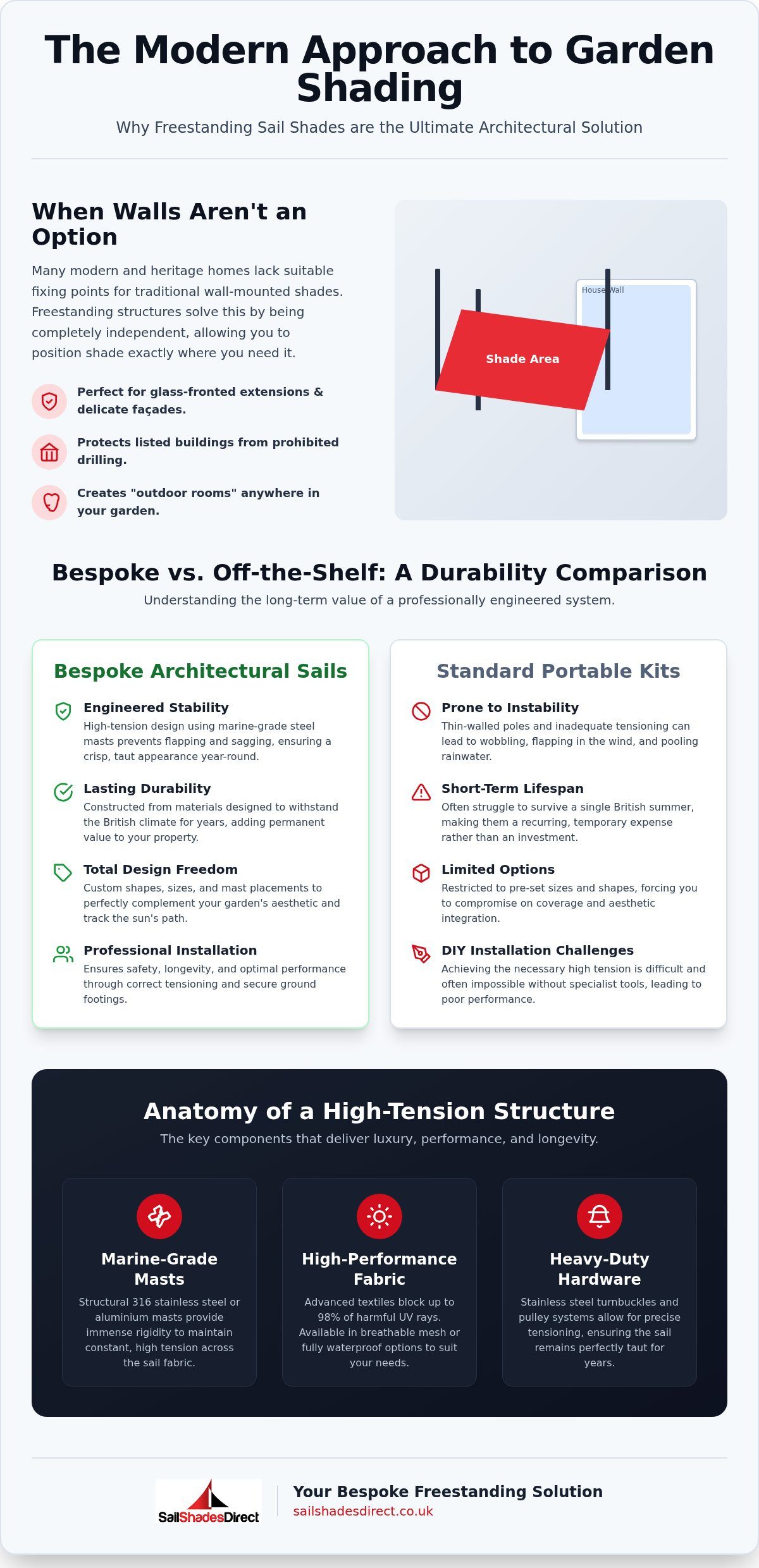
Standard wall-mounted sails are often the first choice for many, but they aren’t always a viable option. Modern UK architecture frequently incorporates lightweight timber frames, decorative cladding, or extensive glass façades that lack the structural integrity to handle the lateral loads of a tensioned sail. Similarly, owners of heritage or listed buildings often face strict planning restrictions that prohibit drilling into historic stonework. There is also the simple matter of garden layout; if your favourite sun-drenched spot sits twenty metres away from the back door, a wall-mounted solution won’t help you. Freestanding sail shades bypass these structural and legal hurdles entirely by remaining completely independent of the building.
Benefits of a Bespoke Freestanding Approach
Choosing a bespoke freestanding route offers a level of versatility that off-the-shelf kits simply can’t match. You aren’t restricted by the angle of your house walls, which means you have total freedom to orient the sail to track the UK sun path throughout the day. This ensures your seating area remains cool during the peak heat of the afternoon. A bespoke approach also allows for more complex “hypar” shapes, where multiple masts at varying heights create beautiful 3D curves in the fabric. This isn’t just for show; these shapes improve water runoff and wind resistance. Because the masts are engineered for your specific site, they provide a level of rigidity that eliminates the “wobble” often seen in cheaper, portable alternatives.
Engineering Luxury: The Anatomy of a High-Tension Freestanding Structure
True luxury in garden design is found in the details that you rarely see, but always feel. When we talk about freestanding sail shades, we’re describing a precision-engineered system designed to withstand the unpredictable British climate. Unlike temporary kits that rely on thin-walled poles, a professional architectural sail uses masts made from marine-grade 316 stainless steel or structural aluminium. These materials don’t just look stunning; they provide the immense rigidity required to keep the fabric under constant tension. This tension is vital. It prevents the sail from flapping or pooling water, ensuring your outdoor space remains a tranquil environment even when the breeze picks up.
The fabric itself is a marvel of modern textile engineering. High-quality sails offer significant UV protection, with some advanced materials blocking up to 98% of harmful rays. Whether you choose a breathable mesh that allows hot air to escape or a fully waterproof textile with a high hydrostatic head rating, the goal is long-term stability. To maintain this, we utilise heavy-duty turnbuckles and pulley systems. These components allow for micro-adjustments, keeping the sail perfectly taut over years of use. If you’re looking for a lasting installation, you might explore our bespoke design options to see how these components work together.
Mast Materials and Finish Options
Choosing the right material depends heavily on your location. For gardens near the coast, stainless steel 316 is essential to prevent salt-air corrosion. If you prefer a more integrated look, structural aluminium masts can be powder-coated to match your home’s window frames or garden furniture. We calculate the required mast diameter based on the sail’s total surface area and local wind exposure, ensuring the structure remains rock-solid. This ensures that your freestanding sail shades don’t just survive the weather; they thrive in it.
Foundations and Structural Stability
The secret to a permanent sail lies beneath the surface. Concrete footings are the gold standard, providing the necessary ballast to counter the lifting forces of the wind. We assess ground conditions carefully, as a soft lawn requires a different approach to an established stone terrace. For those interested in the technical specifics of handling gale-force conditions, our guide to wind resistant sun sails offers deeper insight. Every foundation we design is bespoke, tailored to the specific load-bearing requirements of your unique garden landscape.
Portable Kits vs Bespoke Freestanding Sails: Choosing for Longevity
When you first decide to enhance your outdoor space, the temptation to opt for a budget-friendly, off-the-shelf kit is understandable. Retailers often promote these as a quick fix for summer sun. However, there’s a significant gulf between a temporary “pop-up” pole and the permanent engineering of professional freestanding sail shades. Whilst a mass-produced kit might look acceptable on a calm afternoon, it often lacks the structural integrity to survive a single British winter. A bespoke installation is designed for a decade of performance, not just a few weeks of sunshine.
The most immediate difference is felt in the wind. Portable kits typically use thin-walled, multi-part poles that are prone to swaying or “wobbling” in even a moderate breeze. This movement creates a cycle of stress that eventually leads to metal fatigue or fabric failure. In contrast, our architectural masts are solid, single-piece structures anchored deep into the ground. This rigidity allows the sail to remain under high tension, which is the secret to wind resistance. It transforms the sail from a flapping piece of cloth into a stable, quiet, and reliable canopy that you don’t have to worry about every time the weather turns.
The Hidden Costs of Cheap Portable Shades
Budget options often end up being more expensive over time. We frequently see homeowners replace low-grade kits year after year because the fabric has torn or the poles have bent beyond repair. Beyond the financial cost, there’s a safety concern. In coastal areas or exposed gardens, an unsecured or flimsy structure can become a hazard during a sudden gust. Additionally, the textiles used in cheaper kits often degrade quickly under UV exposure, losing their colour and structural strength within months. Architectural-grade fabrics are designed to resist this degradation, maintaining their vibrancy and protection for years.
Why Bespoke Installation Adds Value
A professional installation begins long before the first hole is dug. We conduct a thorough site survey to understand the sun’s path across your specific garden, ensuring the masts are placed perfectly to provide shade when you actually need it. This bespoke approach allows us to integrate the structure seamlessly with your existing landscaping, whether that’s tucking masts into flower beds or aligning them with your patio’s edge. Ultimately, these high-quality architectural additions do more than provide shade; they act as a permanent upgrade that can increase your property’s overall appeal and market value. It’s a “set and forget” solution that replaces constant adjustments with genuine peace of mind. For a comprehensive overview of how to approach this process from the ground up, our guide to custom exterior shading design for UK spaces walks you through every key decision, from fabric selection to structural planning.
5 Inspiring Examples of Freestanding Shade Sails in Modern Landscapes
Visualising how freestanding sail shades integrate into a garden is the first step toward transforming your outdoor space. These structures aren’t just functional; they’re architectural statements that define how you use your land. Unlike wall-attached options, these independent designs allow you to reclaim areas of your garden that were previously unusable due to intense heat or lack of privacy. Here are five sophisticated examples of how bespoke engineering can elevate your landscape in 2026.
Residential Masterpieces
1. The Sunken Fire Pit Retreat: In this minimalist design, a single, large-scale grey sail is suspended over a sunken seating area. By using three masts of varying heights, the sail creates a “hypar” curve that adds a sculptural element to the garden whilst providing essential shade during the day and trapping warmth from the fire pit at night. It’s a perfect example of how freestanding sail shades can create an intimate, “outdoor room” feel far from the main house.
2. The Clifftop Multi-Sail Sculpture: For gardens exposed to heavy maritime winds, a bespoke coastal shade sail system is essential. This example uses overlapping sails in shades of azure and white to mimic the ocean. The masts are engineered from marine-grade stainless steel, ensuring they remain corrosion-free whilst providing a dramatic visual effect that frames the sea view without obstructing it.
3. The Island Dining Terrace: Positioned in the centre of a large lawn, this triangular sail creates a floating canopy over a bespoke dining table. By using just three masts, the design maintains an open, airy feel that doesn’t clutter the landscape. It’s an ideal solution for family gardens where the best sun-drenched spot is located away from the shadows of the house.
Commercial and Public Spaces
4. The Hotel Alfresco Zone: Large-scale hospitality venues often require a robust commercial shading solution to protect guests on expansive terraces. This example features a series of interconnected sails that cover a poolside bar. The use of multiple masts allows for a vast area of coverage whilst maintaining the high tension required for wind resistance and safety in public areas.
5. The Floating Poolside Oasis: Using four masts to create a rectangular canopy, this design provides a cool, shaded sanctuary directly over the water’s edge. The fabric is a high-performance breathable mesh that allows heat to rise and escape, keeping the poolside area significantly cooler than the surrounding deck. You can view our full portfolio of bespoke projects to see how these architectural designs can be tailored to your specific garden dimensions.
Designing Your Bespoke Freestanding Solution with Sail Shades Direct
Transitioning from an inspired vision to a completed architectural structure requires more than just a set of poles and a piece of fabric. At Sail Shades Direct, we specialise in the end-to-end delivery of freestanding sail shades, ensuring that every project is as structurally sound as it is visually stunning. Our process is a partnership. We take the time to understand how you intend to use your space, whether you’re creating a quiet corner for morning coffee or a grand area for evening entertaining. This collaborative approach allows us to manage the complex engineering whilst you focus on the creative direction of your garden.
The journey begins with a precision-focused consultation. We don’t believe in one-size-fits-all kits; instead, we look at the specific orientation of your plot and the sun’s trajectory across the UK sky. Once the design is finalised, your sail moves to our dedicated UK-based manufacturing facility. Here, we use advanced fabrication techniques to ensure every seam and attachment point is built for longevity. Finally, our professional national installation team takes over. They handle the heavy-duty groundworks and the final high-tension rigging, giving you the confidence that your new canopy is safely secured. With over 10 years of experience in the UK market, we’ve refined this process to be as stress-free as possible for our clients.
Tailoring the Design to Your Garden
Every garden has its own unique geometry and flow. We assess your landscape to determine the most effective mast locations, ensuring they provide maximum shade without obstructing your favourite views. Choosing the right sail shape is about balance. A large rectangular sail might offer the most coverage, but a series of overlapping triangles often provides a sense of aesthetic “lightness” that complements modern landscaping. We help you navigate our extensive range of high-performance textiles, from vibrant colours that make a statement to neutral tones that blend amongst the trees. It is about creating a solution that feels like it has always belonged in your garden.
The Sail Shades Direct Promise
We pride ourselves on a versatile “can-do” attitude. Whether you have a complex multi-level terrace or a particularly exposed coastal site, we find the engineering solution that works. You won’t be left guessing about structural integrity or wind loads; we handle the technical mastery so you can simply enjoy the reprieve of your new outdoor environment. For a deeper look at how we customise every element of our structures, you can explore our full guide to bespoke sail shades UK. We are here to act as your reliable partner, turning your garden into a professional-grade sanctuary that stands the test of time.
Transform Your Outdoor Living Space with Architectural Shading
Our team is ready to help you translate these architectural examples into a reality for your own home. We pride ourselves on delivering a bespoke design for every project, backed by high-tension, wind-resistant engineering and professional national installation. Don’t let awkward layouts or delicate masonry limit your garden’s potential. Design your bespoke freestanding sail shade today with Sail Shades Direct and start enjoying a more comfortable, stylish outdoor lifestyle. We look forward to helping you create the perfect reprieve from the pressures of daily life.
Frequently Asked Questions
Are freestanding sail shades stable in high winds?
Yes, bespoke freestanding sail shades are exceptionally stable when they are engineered with the correct mast diameter and deep concrete footings. Unlike lightweight parasols that can easily topple, these structures utilise high-tension principles to remain taut and quiet during typical British gusts. The rigidity of the architectural masts ensures the fabric doesn’t flap, which significantly reduces the stress on the hardware and the ground anchors.
Do I need planning permission for freestanding sail masts in the UK?
You generally don’t need planning permission for smaller, temporary freestanding structures in a residential garden. However, permission is likely required if the sail is over 2.5 metres in height, covers an area of 30m² or more, or is situated within 20 metres of a school boundary. If you live in a conservation area or own a listed building, it’s always best to check with your local council before starting any installation.
What is the best material for freestanding sail masts?
Marine-grade 316 stainless steel is the premier choice for its immense structural strength and resistance to corrosion, particularly in coastal environments. Structural aluminium is also an excellent alternative for 2026, as it offers a sleek finish and can be powder-coated to match your garden’s existing colour palette. Both materials provide the necessary rigidity to maintain the high tension required for a professional-grade installation.
Can I leave my freestanding sail shade up all year round?
Whilst high-quality architectural fabrics are designed for long-term durability, we recommend removing the sail during the winter months. This protects the structure from heavy snow loading and extreme winter gales that can put unnecessary strain on the masts. Taking the sail down for the coldest part of the year is a simple process that ensures your investment remains in peak condition for over a decade.
How deep do the foundations need to be for freestanding masts?
Foundations for permanent architectural masts typically need to be between 800mm and 1000mm deep. This depth is essential to provide enough concrete ballast to counter the significant lifting forces created by the wind on the sail’s surface. The exact specifications depend on your specific ground conditions and the total surface area of the freestanding sail shades being installed.
Can I install a freestanding sail shade myself?
You can certainly install basic, temporary kits yourself, but professional installation is essential for permanent architectural structures. The level of tension required for a large sail is significant, and the groundworks must be precisely calculated to ensure safety. Our national installation service takes the stress out of the process, ensuring that every mast is perfectly aligned and every sail is safely tensioned.
What is the maximum size for a single freestanding sail shade?
A single bespoke sail can comfortably reach dimensions of 5 to 6 metres per side whilst maintaining the necessary tension. For larger areas, we recommend a multi-sail design rather than one oversized canopy. This approach allows for better wind resistance and creates a more visually interesting, overlapping architectural effect that is easier to manage and maintain over time.
How do I maintain the tension in my freestanding sail shade?
Tension is maintained through high-quality stainless steel turnbuckles or integrated pulley systems located at the mast attachment points. We recommend a quick visual check twice a year to ensure the fabric remains crisp and taut. If you notice any slight slack, a few turns of the turnbuckle will restore the perfect “sail” shape and prevent water from pooling during heavy rain.