
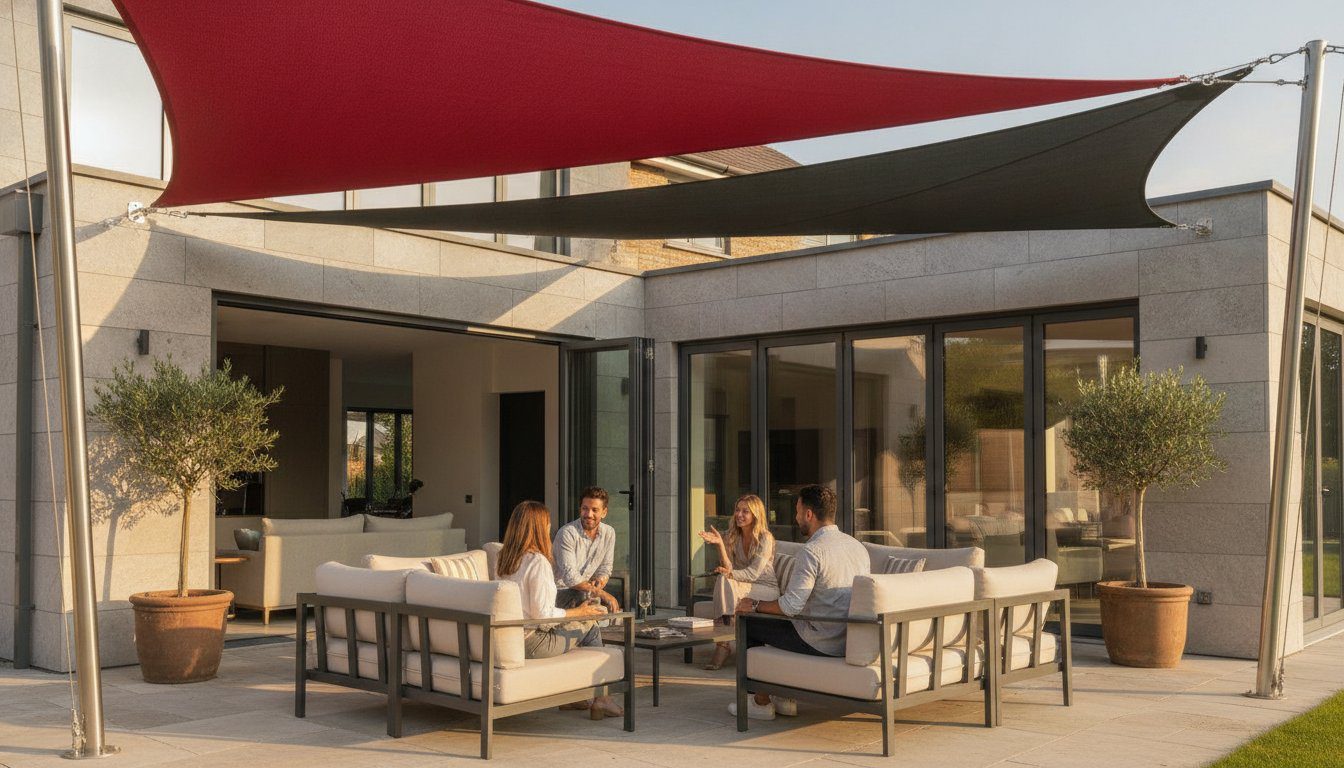
How to Design Bespoke Exterior Shading for UK Spaces
Why do so many British homeowners settle for a sagging, off-the-shelf sun sail that tears at the first sign of a breeze? You’ve likely felt the frustration of a DIY kit that looks nothing like the brochure, or perhaps you’re worried about which fabrics truly stand up to a sudden downpour. Getting custom exterior shading design right is a delicate balance of engineering and aesthetics. It’s about more than just a bit of shade; it’s about creating a durable, wind-resistant architectural statement that adds genuine value to your property.
We understand that your outdoor space should be a sanctuary, not a source of stress! By mastering the principles of bespoke shading, you can finally transform your terrace into a functional room that’s usable all year round. In this article, we’ll clear up the confusion between waterproof and breathable fabrics whilst showing you exactly how to plan a structure that stays taut and secure. From meeting the latest Part O building regulations to choosing the perfect earthy tones for 2026, you’re about to discover how to design a professional-grade retreat that handles everything the UK climate throws at it.
Key Takeaways
- Learn why off-the-shelf kits often fail in the British weather and how architectural tensioning keeps your structure secure.
- Discover how to map solar geometry whilst ensuring your shade provides maximum protection exactly where you need it most.
- Master the essential steps of custom exterior shading design to create a seamless transition between your indoor and outdoor living areas.
- Understand the science of wind loads and why marine-grade stainless steel hardware is vital for a permanent, safe installation.
- Explore the practical differences between bespoke sail shades and rolling sun sails to find the perfect fit amongst various layout options.
Principles of Custom Exterior Shading Design for UK Climates
Think of custom exterior shading design as more than just a way to block the sun. It’s a precise architectural intervention that alters how you experience your home or business. Whilst a standard umbrella might offer a temporary patch of shade, a bespoke structure integrates with your building’s footprint to create a genuine “outdoor room.” This approach relies on established architectural shading principles to manage solar gain, ensuring your terrace remains cool without plunging your interior rooms into darkness. By tailoring the height, angle, and tension of each sail or awning, we create a solution that feels like a natural extension of your property rather than an afterthought.
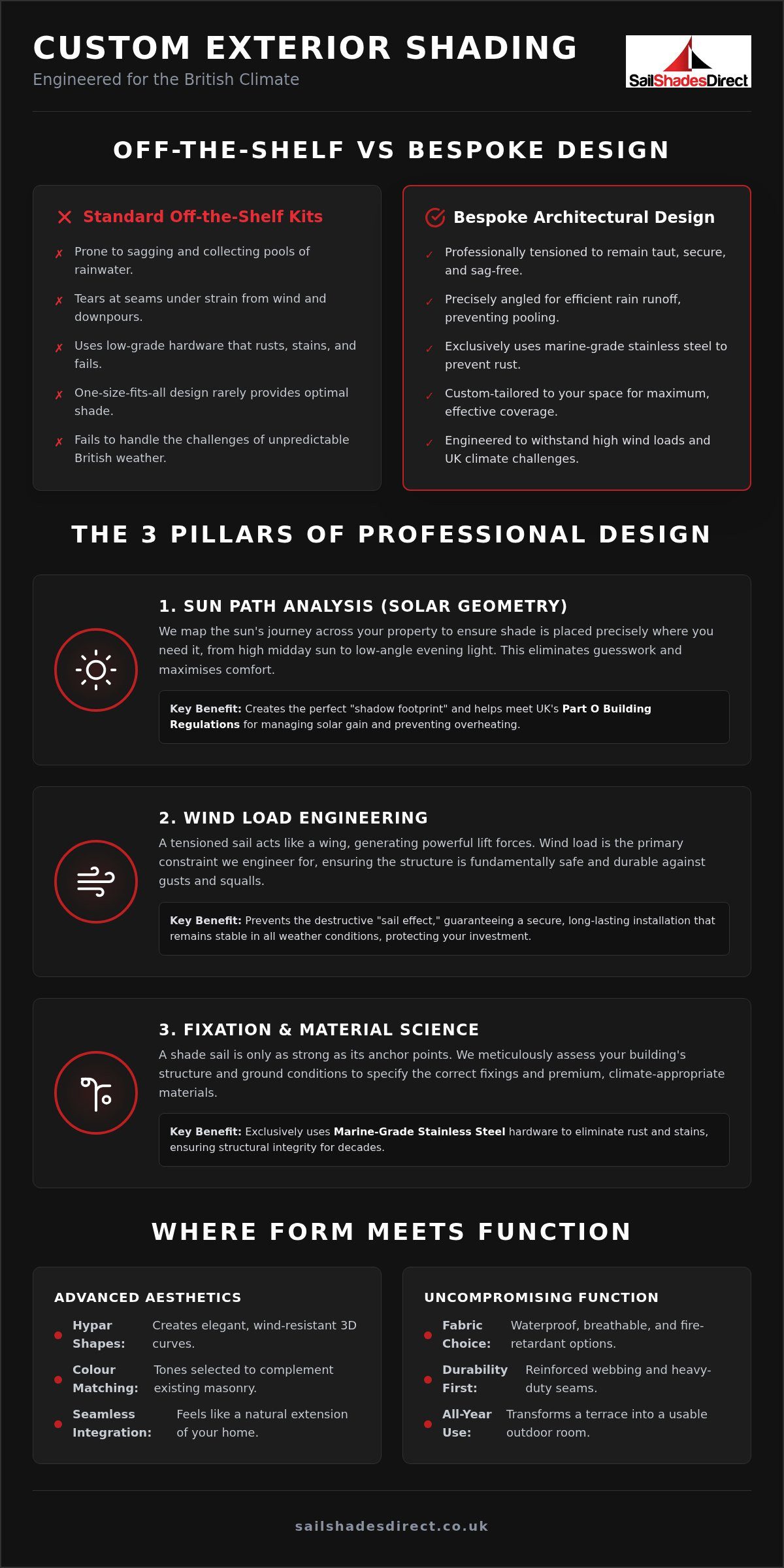
Most homeowners turn to bespoke solutions after a frustrating experience with “off-the-shelf” kits. In the UK, our weather is notoriously unpredictable. Cheap, pre-made sails often lack the reinforced webbing and heavy-duty fixings required to stay taut during a sudden summer squall. They sag, collect pools of rainwater, and eventually tear at the seams. A professional custom exterior shading design accounts for these variables from the start. We balance UV protection with light filtration and ensure the fabric is pitched at the correct degree to allow for efficient rain runoff, preventing the dreaded “puddling” effect that ruins lesser structures.
The Aesthetic vs. Functional Balance
Creating a beautiful space requires a keen eye for colour and form. We often recommend colours that complement your existing masonry or joinery, such as warm greys or earthy tones, which help the structure blend into the landscape. Beyond colour, the shape of the shade itself is vital for stability. We frequently utilise “hypars”—hyperbolic paraboloids—which are 3D shapes created by setting mounting points at different heights. These curves aren’t just for show; they create the necessary tension to keep the fabric wind-resistant whilst adding a striking architectural flair to your garden. Because our climate is damp, we exclusively use marine-grade stainless steel hardware to prevent rust and staining over time.
Commercial vs. Residential Design Needs
The requirements for a private patio differ significantly from those of a high-traffic commercial setting. For a domestic project, the focus is often on intimacy and creating a versatile space for family dining. In contrast, commercial designs for pub gardens or restaurant terraces must prioritise scale and rigorous safety standards. Public spaces often require fabrics with specific fire retardancy ratings to meet local building regulations. Whether we’re installing a cluster of intimate sail shades for a cottage garden or several giant umbrellas for a bustling hotel courtyard, the engineering remains uncompromising. We ensure every structure is scaled correctly to provide maximum coverage whilst maintaining clear walkways for guests and staff alike.
Analysing Your Space: Sun Paths, Wind Loads, and Fixation
Have you ever noticed how the shade you planned for midday has completely vanished by 4pm? It’s a common frustration. Successful custom exterior shading design starts with a rigorous analysis of your specific environment. We don’t just look at the patio; we map the sun’s journey across your garden during the peak summer months. This ensures that when you’re ready to relax, the shadow is actually where you need it to be. This level of planning is now more relevant than ever, as the UK Building Regulations officially recognise solar shading as a vital tool for managing building temperatures and comfort.
Calculating Solar Geometry in the UK
Whilst the midday sun is high and relatively easy to block, the low-angle evening sun often sneaks under traditional umbrellas, leaving you squinting during dinner. To get it right, you need to determine the “shadow footprint” at various times of the day. We look at how the sun interacts with your home’s orientation to prevent overheating in south-facing rooms. For particularly exposed sites where the breeze is a constant factor, choosing wind resistant sun sails is the smartest way to ensure your investment stays secure through every season.
Structural Integrity and Ground Conditions
The “sail effect” is no joke. A well-tensioned shade sail acts like a wing, generating significant lift and pull. This makes wind load your primary design constraint. Before we even think about fabric, we must identify secure fixation points. Can your house walls handle the tension of a heavy-duty arm awning? Modern timber-frame or highly insulated homes often require specialised brackets to reach the structural core. In cases where the wall isn’t suitable, or for large gardens, freestanding sail shades offer a robust alternative. These structures rely on deep concrete footings and industrial-grade posts to remain stable. Tension is the secret to longevity; without it, the fabric will flap, causing premature wear and potential hardware failure. If you’re unsure about your wall type, it’s always worth speaking with an expert to assess the structural suitability of your space.
Selecting the Right Shading Structure for Your Style
Once you’ve analysed the sun paths and structural constraints of your site, the fun part begins. Choosing the right custom exterior shading design is about more than just utility; it’s about finding a structure that elevates your property’s architectural character. Bespoke sail shades are often the first choice for those seeking a contemporary, dramatic look. They create dynamic, shifting shadows that turn a plain terrace into a focal point. If you prefer flexibility, rolling sun sails offer a clever middle ground, providing the high-tension aesthetic of a sail with the ability to retract the fabric when you want to enjoy the full sun. For a more traditional patio feel, heavy-duty arm awnings provide robust overhead protection, whilst exterior blinds are the ideal solution for vertical sun screening and creating privacy amongst close neighbours.
Tensioned Sails vs. Retractable Awnings
Deciding between a permanent sail and a retractable system often depends on how you intend to use your outdoor space throughout the year. Permanent, high-tension sails are engineered to stay in place for several months, making them incredibly resilient in exposed coastal areas where mechanical awnings might be vulnerable to sudden gusts. From a regulatory perspective, many of these installations are supported by permitted development rights for outbuildings, but we always recommend a quick check for listed properties. Retractable awnings offer the convenience of instant shade at the touch of a button, which is perfect for variable days, whilst fixed architectural sails offer a “set and forget” durability that defines the garden’s atmosphere all summer long.
Material Science: Fabrics for the British Weather
The longevity of your custom exterior shading design depends heavily on the fabric choice. We typically work with three specialist materials designed to withstand the UK’s unique climate. HDPE (High-Density Polyethylene) knitted mesh is a fantastic option for breathability; it allows hot air to escape whilst providing immense structural strength under tension. If you require a completely weather-protected area, PVC-coated polyesters are used for waterproof bespoke sail shades, ensuring your outdoor furniture stays dry during a passing shower. For our heavy duty arm awnings, we use solution-dyed acrylic fabrics. These are specifically treated to resist fading and mildew, keeping your installation looking vibrant even after years of exposure to the elements.
Step-by-Step Guide to Planning Your Custom Shading Layout
Mapping out your custom exterior shading design is where your vision begins to take physical shape. It’s an exciting phase that transforms a list of requirements into a tangible plan for your garden or terrace. To ensure your new structure is as functional as it is beautiful, we recommend following a logical progression that moves from lifestyle needs to technical specifications.
- Step 1: Define your primary use case. Decide if the area is primarily for alfresco dining, a protected lounging zone, or a safe, shaded spot for children to play.
- Step 2: Measure the available space. Record the footprint of the area you want to cover and identify potential mounting heights on your property walls or where posts might sit.
- Step 3: Sketch the desired shadow area. Using your knowledge of sun paths, draw where you want the shadow to fall during the hottest part of the day, usually between 12pm and 3pm.
- Step 4: Choose your structure. Select between a sail, awning, or umbrella based on your site’s wind exposure and your personal aesthetic preference.
- Step 5: Consult a professional. Share your sketches with an expert to validate the engineering, ensuring the tension and fixings are safe for UK weather conditions.
Visualising the 3D Space
When you’re planning a layout, it’s easy to think in two dimensions, but custom exterior shading design is a 3D discipline. Varying the heights of your fixing points is essential for effective drainage. By setting points at different levels, you create “hypar” shapes that naturally shed water, preventing heavy pools from forming on waterproof sails. This variation also helps avoid a “tunnel effect,” where air becomes trapped and stagnant. Instead, a well-designed pitch encourages airflow, keeping the area beneath the fabric fresh and comfortable even on the stillest summer afternoons.
Integrating Lighting and Heating
To truly master year-round usability, you must consider the environment after the sun goes down. Many homeowners now choose to integrate LED lighting directly into awning arms or at the corners of sail structures to create a warm, inviting glow. If you’re planning to use the space during the cooler months, safe placement of infrared heaters is a must. These should be positioned to provide direct warmth to seating areas without being too close to the fabric. Organising your electrical feeds during this initial design phase prevents messy, exposed cabling later on. If you’re ready to move from a sketch to a professional plan, contact us to discuss your layout requirements and we’ll help you bring these technical details together.
Executing Your Design: Why Professional Fabrication Matters
The final stage of your project is where the theory of custom exterior shading design meets the reality of high-end engineering. Whilst it’s tempting to think of a shade sail as a simple piece of fabric, the difference between a domestic sewing machine and industrial-grade fabrication is vast. Professional sails are constructed using UV-stabilised thread and reinforced webbing at every edge. This prevents the seams from rotting or stretching under the immense loads generated by the wind. To ensure your structure survives the British weather, we exclusively use 316 marine-grade stainless steel hardware. This material won’t rust or leave unsightly streaks on your masonry, ensuring your garden remains a pristine architectural statement for years to come.
The Sail Shades Direct Design Process
We believe every project deserves a collaborative, expert touch. Our process begins with a comprehensive site survey to understand your space’s unique challenges, followed by a bespoke CAD design that visualises exactly how the shading will perform. Every one of our products is manufactured right here in the UK, allowing us to maintain strict quality control throughout the build. Our nationwide professional fitting service means that whether you’re on the coast or in a city centre, our team will handle the heavy lifting. We take pride in a “can-do” attitude, finding creative solutions for even the most complex mounting requirements to ensure your architectural sail shades are tensioned to perfection.
Long-Term Durability and Guarantees
Investing in custom exterior shading design should provide peace of mind for the long term. A professional installation is backed by meaningful guarantees that cover both the fabric’s UV stability and the structural integrity of the hardware. To keep your bespoke shade looking new, a simple annual cleaning with mild soapy water is usually all that’s required. During the harshest winter months, we often recommend taking down non-retractable sails to protect the fabric from heavy snow loads or extreme gales. This small bit of care, combined with our precision engineering, ensures your outdoor retreat remains a functional and beautiful extension of your home for a decade or more. If you’re ready to see how our craftsmanship can transform your space, we’re here to help you get started.
Elevate Your Garden with Professional Shading
Designing a retreat that balances architectural beauty with the practical demands of the British climate is a rewarding journey. By mapping solar geometry and prioritising structural integrity, you ensure your garden remains a comfortable sanctuary regardless of the sun’s position or a sudden gust of wind. The success of your custom exterior shading design lies in the details, from the precision of the initial CAD layout to the quality of the marine-grade hardware used in the final installation.
Don’t settle for temporary solutions that sag or fail. With over 10 years of British craftsmanship and a reputation as specialists in high-tension architectural sails, we’re ready to help you realise your vision. Our nationwide professional installation team takes the stress out of the process, bringing technical mastery and a versatile “can-do” spirit to every project. Are you ready to turn your terrace into a weather-protected architectural statement? Request a Bespoke Design Consultation with Sail Shades Direct and let’s start planning your perfect outdoor environment together!
Frequently Asked Questions
Do I need planning permission for a custom sail shade in the UK?
In most instances, you don’t need planning permission for sails or awnings as they are considered temporary structures under permitted development rights. However, if your property is a listed building or situated within a conservation area, you must check with your local planning authority before proceeding. We always recommend a quick consultation to ensure your project meets all specific local requirements and avoids any future complications.
Can bespoke exterior shading be left up all year round?
Whilst our structures are engineered for durability, we generally recommend taking down non-retractable sail shades during the winter months to protect them from heavy snow and extreme gales. Retractable systems, such as rolling sun sails or arm awnings, can stay in place throughout the year provided they are stored safely in their cassettes during inclement weather. This simple seasonal care significantly extends the lifespan of your investment.
How do I choose between a waterproof and a breathable fabric?
Choosing between these depends on whether your primary goal is rain protection or heat management. Breathable HDPE knitted mesh is the best choice for custom exterior shading design where you want to block UV rays whilst allowing hot air to rise and escape. If you need a completely dry area for alfresco dining, a waterproof PVC-coated polyester is ideal, provided the structure is pitched at a steep enough angle to prevent water pooling.
What is the maximum size for a single custom sail shade?
A single custom sail shade can typically reach sizes up to 50 or 60 square metres, though the exact limit depends on the structural integrity of your mounting points. For larger spaces, we often recommend a “cluster” approach using multiple overlapping sails. This not only manages the tension more effectively but also creates a more striking, architectural look that enhances the overall aesthetic of your garden.
How much wind can a professional tensioned sail shade withstand?
Professionally installed, high-tension sails are designed to withstand winds of up to 50 or 60 miles per hour when properly maintained. The secret to this resilience is the industrial-grade engineering of the fixings and the use of marine-grade hardware that keeps the fabric taut. Unlike cheap DIY kits that flap and tear in a breeze, a bespoke system remains stable and quiet even during a typical British summer squall.
Can I attach a heavy-duty awning to a bungalow or timber-framed house?
Yes, you can certainly attach shading to bungalows or timber-framed homes, but it requires specialist spreader brackets to distribute the load safely. We use internal reinforcements or bespoke plates to ensure the structure is anchored to the building’s structural core rather than just the cladding. If the wall isn’t suitable for high-tension loads, we can integrate freestanding posts to provide a robust and secure alternative.
How do I maintain the colour of my exterior blinds and sails?
Maintaining the vibrant colour of your shades is straightforward; a gentle wash with mild soapy water and a soft brush once a year is usually all that’s required. You should avoid using harsh chemicals or high-pressure power washers, as these can damage the fabric’s fibres and its protective UV coatings. Regular cleaning prevents the build-up of organic matter, ensuring your bespoke shade stays looking fresh and new for years.
What is the typical lead time for a custom exterior shading design?
Typical lead times for a custom exterior shading design range from four to eight weeks, depending on the complexity of the fabrication and the time of year. During the peak summer months, demand across the UK increases, which can slightly extend these timings. We recommend starting your design process in early spring so your bespoke structure is manufactured and installed in time for the first warm days of the season.